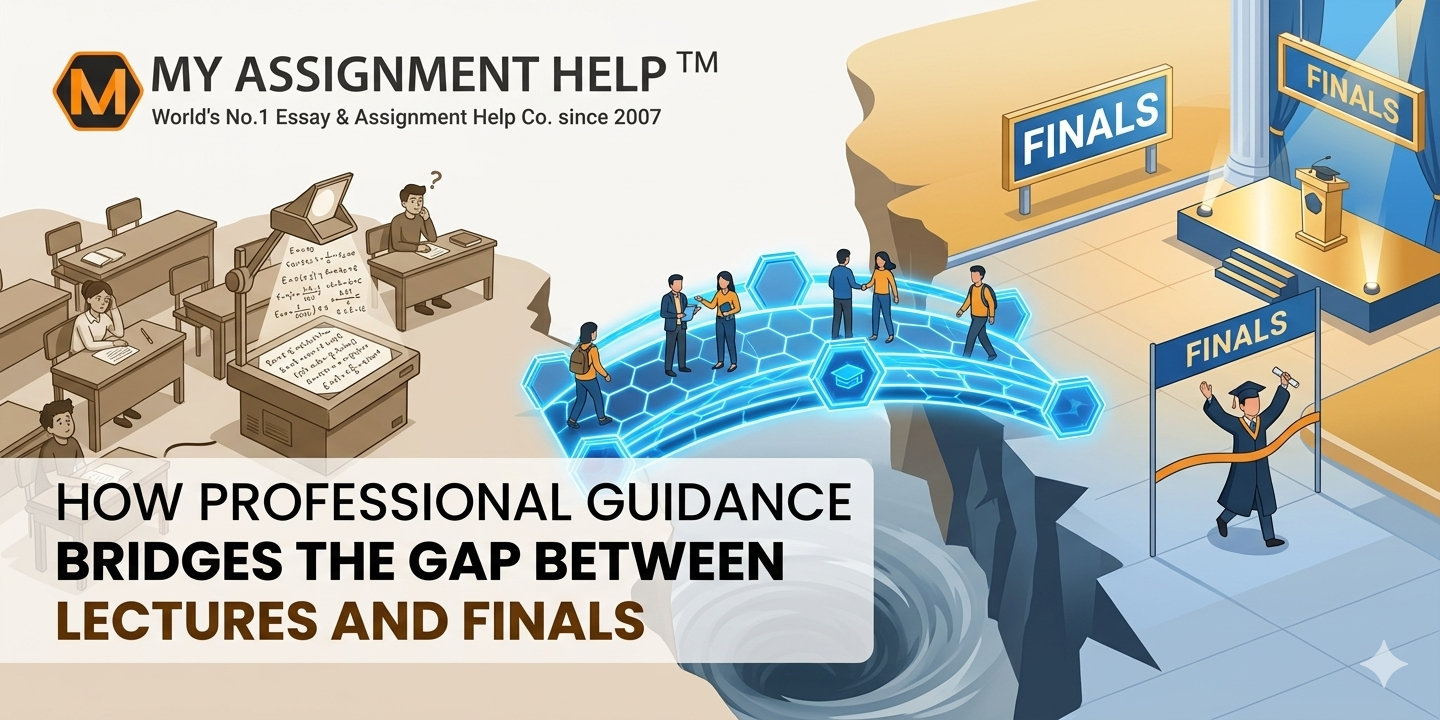
Mastering Complex Coursework: How Professional Guidance Bridges the Gap Between Lectures and Finals
The transition from a crowded lecture hall to a high-stakes final exam is rarely a straight line. For many students in the United States, it is a gauntlet of dense syllabi, overlapping deadlines, and the sheer cognitive load of advanced coursework. While professors provide the theoretical foundation, the application of that knowledge often requires a level of individualized support that the traditional classroom setting isn’t designed to provide.
As academic requirements become more rigorous, the “middle ground”—the space where students must transform lecture notes into mastery—has become increasingly difficult to navigate alone.
The Growing Complexity of Modern Higher Education
According to the National Center for Education Statistics (NCES), undergraduate enrollment in STEM and healthcare fields has seen a significant uptick over the last decade. These subjects often require not just rote memorization, but high-level synthesis of data and complex problem-solving.
However, a study by the Higher Education Research Institute (HERI) at UCLA found that a growing percentage of students feel overwhelmed by the transition to independent research and high-volume assignments. The gap between hearing a concept in a 50-minute lecture and applying it to a 20-page term paper is where many students lose their footing.
The “Lecture-to-Exam” Disconnect
- Information Overload: Lectures often cover broad theories, leaving the granular details of execution to the student.
- Time Scarcity: Modern students often balance part-time work or internships, leaving little room for the deep work required for complex subjects.
- The Isolation Factor: Distance learning and large seminar classes can leave students feeling like a number rather than a learner.
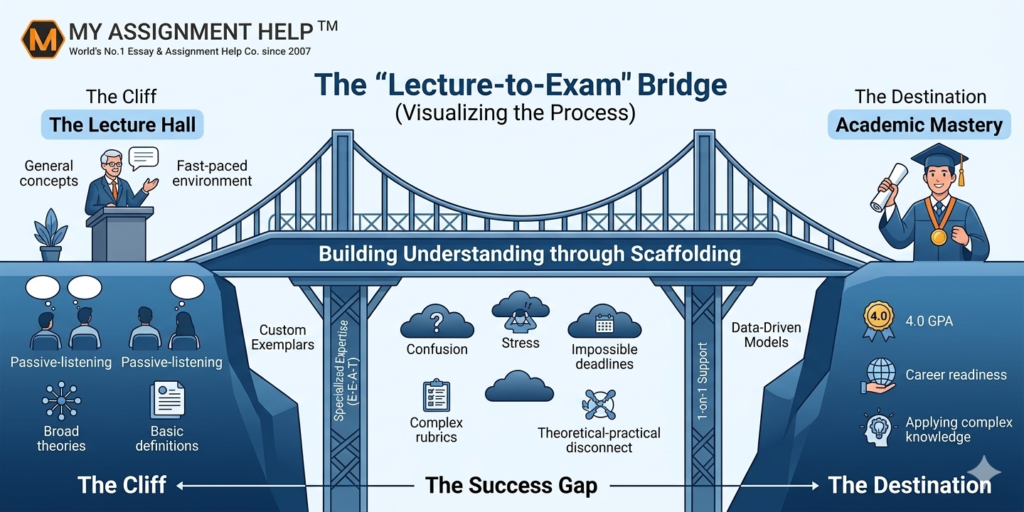
In many cases, the pressure to maintain a high GPA while juggling these responsibilities leads students to consider external support. For those struggling to manage an impossible workload, paying someone to do your assignment has emerged as a strategic way to de-clutter their schedules and focus on core subject mastery rather than administrative burnout.
How Professional Guidance Bridges the Gap
Professional academic guidance isn’t just about finishing a task; it’s about pedagogical scaffolding. It provides the “how-to” that is often missing from the “what-is” of a lecture.
1. Personalized Scaffolding
Scaffolding is an instructional technique where a mentor provides temporary support as a student develops new skills. Professional academic services offer this by providing high-quality models and explanations that clarify complex rubrics. When you ask an expert to complete my assignment, you aren’t just getting a finished product; you are receiving a blueprint of how a professional approaches a problem, sources data, and structures an argument.
2. Specialized Expertise (E-E-A-T)
Search engines and academic institutions both value Experience, Expertise, Authoritativeness, and Trustworthiness (E-E-A-T). When students seek guidance, they benefit from writers and researchers who hold advanced degrees (MA, PhD) in specific niches—be it Nursing, Quantum Physics, or Case Law. This level of specialized insight is often more detailed than what a general TA (Teaching Assistant) can provide in a brief office hour.
3. Data-Driven Precision
Academic success in 2026 relies heavily on data literacy. Professional guidance ensures that assignments aren’t just well-written, but backed by current, peer-reviewed sources.
Key Data Point: A survey of college students indicated that 65% of students felt that “clearer examples of successful work” would have improved their grades more than extra lecture time.
Strategic Benefits of Professional Academic Support
| Feature | Classroom Lecture | Professional Guidance |
| Pace | Fixed by Curriculum | Tailored to Student |
| Feedback | Delayed (Post-Grading) | Real-time / Pre-submission |
| Depth | Broad Overview | Deep-Dive on Specific Issues |
| Application | Theoretical | Practical & Solution-Oriented |
Key Takeaways for Academic Success
- Bridge the Gap Early: Don’t wait until the week of finals to seek clarification on concepts introduced in week two.
- Utilize Exemplars: Use professionally drafted assignments as study guides to understand complex formatting and citation styles (APA 7, MLA 9, Chicago).
- Time Management: Outsource secondary tasks to focus on primary learning objectives and mental well-being.
- Verify Sources: Always ensure your support service uses credible databases like JSTOR, PubMed, or IEEE Xplore.
FAQs: Navigating Academic Support
Is professional academic guidance considered cheating?
When used as a study aid, model paper, or tutoring tool, professional guidance is a legitimate educational resource. It is designed to help students understand the standard of work required at the university level.
How does this help with final exams?
By having a professionally crafted assignment, you have a “perfect” study guide tailored to your specific course requirements. Reviewing these materials helps solidify concepts that may have been confusing during the lecture.
What should I look for in a service provider?
Prioritize services that emphasize E-E-A-T, offer plagiarism reports, provide transparent communication with experts, and have a proven track record of meeting strict deadlines.
About the Author: Sarah Jenkins
Senior Content Strategist at MyAssignmentHelp
Sarah Jenkins has over a decade of experience in academic consultancy and SEO-driven educational content. Holding an M.Ed. from Boston University, she specializes in developing strategies that help students synchronize their learning habits with modern digital resources. Sarah is a firm believer in the “Scaffolding Method,” helping students navigate the complexities of higher education through expert-led guidance and data-backed research.
References
Journal of Educational Psychology. “The Impact of Scaffolding on Student Autonomy and Achievement.Mastering Complex Coursework: How Professional Guidance Bridges the Gap Between Lectures and Finals
National Center for Education Statistics (NCES). “Trends in Graduate and Undergraduate Enrollment.” (2025-2026 Update).
Higher Education Research Institute (HERI). “The American Freshman: National Norms.”
The transition from a crowded lecture hall to a high-stakes final exam is rarely a straight line. For many students in the United States, it is a gauntlet of dense syllabi, overlapping deadlines, and the sheer cognitive load of advanced coursework. While professors provide the theoretical foundation, the application of that knowledge often requires a level of individualized support that the traditional classroom setting isn’t designed to provide.
As academic requirements become more rigorous, the “middle ground”—the space where students must transform lecture notes into mastery—has become increasingly difficult to navigate alone.
The Growing Complexity of Modern Higher Education
According to the National Center for Education Statistics (NCES), undergraduate enrollment in STEM and healthcare fields has seen a significant uptick over the last decade. These subjects often require not just rote memorization, but high-level synthesis of data and complex problem-solving.
However, a study by the Higher Education Research Institute (HERI) at UCLA found that a growing percentage of students feel overwhelmed by the transition to independent research and high-volume assignments. The gap between hearing a concept in a 50-minute lecture and applying it to a 20-page term paper is where many students lose their footing.
The “Lecture-to-Exam” Disconnect
- Information Overload: Lectures often cover broad theories, leaving the granular details of execution to the student.
- Time Scarcity: Modern students often balance part-time work or internships, leaving little room for the deep work required for complex subjects.
- The Isolation Factor: Distance learning and large seminar classes can leave students feeling like a number rather than a learner.
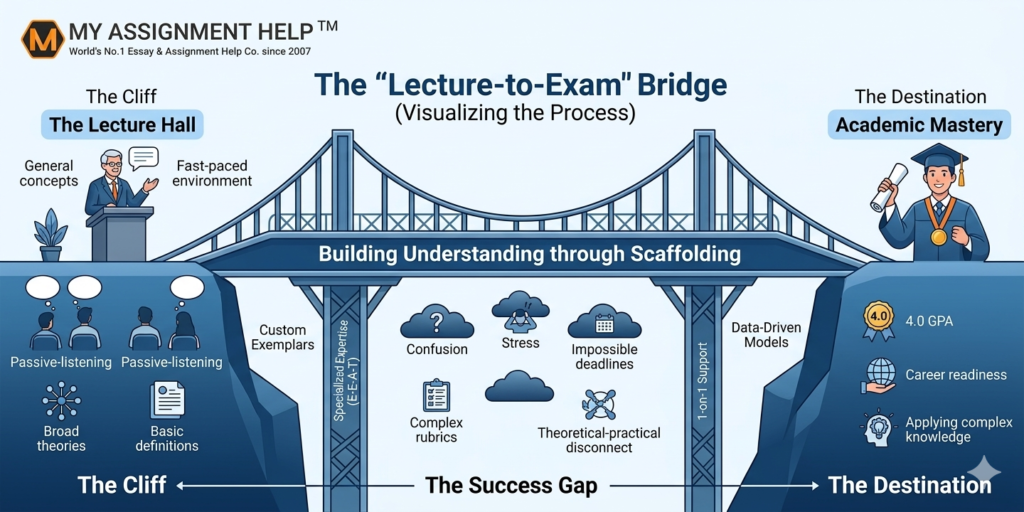
In many cases, the pressure to maintain a high GPA while juggling these responsibilities leads students to consider external support. For those struggling to manage an impossible workload, paying someone to do your assignment has emerged as a strategic way to de-clutter their schedules and focus on core subject mastery rather than administrative burnout.
How Professional Guidance Bridges the Gap
Professional academic guidance isn’t just about finishing a task; it’s about pedagogical scaffolding. It provides the “how-to” that is often missing from the “what-is” of a lecture.
1. Personalized Scaffolding
Scaffolding is an instructional technique where a mentor provides temporary support as a student develops new skills. Professional academic services offer this by providing high-quality models and explanations that clarify complex rubrics. When you ask an expert to complete my assignment, you aren’t just getting a finished product; you are receiving a blueprint of how a professional approaches a problem, sources data, and structures an argument.
2. Specialized Expertise (E-E-A-T)
Search engines and academic institutions both value Experience, Expertise, Authoritativeness, and Trustworthiness (E-E-A-T). When students seek guidance, they benefit from writers and researchers who hold advanced degrees (MA, PhD) in specific niches—be it Nursing, Quantum Physics, or Case Law. This level of specialized insight is often more detailed than what a general TA (Teaching Assistant) can provide in a brief office hour.
3. Data-Driven Precision
Academic success in 2026 relies heavily on data literacy. Professional guidance ensures that assignments aren’t just well-written, but backed by current, peer-reviewed sources.
Key Data Point: A survey of college students indicated that 65% of students felt that “clearer examples of successful work” would have improved their grades more than extra lecture time.
Strategic Benefits of Professional Academic Support
| Feature | Classroom Lecture | Professional Guidance |
| Pace | Fixed by Curriculum | Tailored to Student |
| Feedback | Delayed (Post-Grading) | Real-time / Pre-submission |
| Depth | Broad Overview | Deep-Dive on Specific Issues |
| Application | Theoretical | Practical & Solution-Oriented |
Key Takeaways for Academic Success
- Bridge the Gap Early: Don’t wait until the week of finals to seek clarification on concepts introduced in week two.
- Utilize Exemplars: Use professionally drafted assignments as study guides to understand complex formatting and citation styles (APA 7, MLA 9, Chicago).
- Time Management: Outsource secondary tasks to focus on primary learning objectives and mental well-being.
- Verify Sources: Always ensure your support service uses credible databases like JSTOR, PubMed, or IEEE Xplore.
FAQs: Navigating Academic Support
Is professional academic guidance considered cheating?
When used as a study aid, model paper, or tutoring tool, professional guidance is a legitimate educational resource. It is designed to help students understand the standard of work required at the university level.
How does this help with final exams?
By having a professionally crafted assignment, you have a “perfect” study guide tailored to your specific course requirements. Reviewing these materials helps solidify concepts that may have been confusing during the lecture.
What should I look for in a service provider?
Prioritize services that emphasize E-E-A-T, offer plagiarism reports, provide transparent communication with experts, and have a proven track record of meeting strict deadlines.
About the Author: Sarah Jenkins
Senior Content Strategist at MyAssignmentHelp
Sarah Jenkins has over a decade of experience in academic consultancy and SEO-driven educational content. Holding an M.Ed. from Boston University, she specializes in developing strategies that help students synchronize their learning habits with modern digital resources. Sarah is a firm believer in the “Scaffolding Method,” helping students navigate the complexities of higher education through expert-led guidance and data-backed research.
References
- National Center for Education Statistics (NCES). “Trends in Graduate and Undergraduate Enrollment.” (2025-2026 Update).
- Higher Education Research Institute (HERI). “The American Freshman: National Norms.”
- Journal of Educational Psychology. “The Impact of Scaffolding on Student Autonomy and Achievement.